
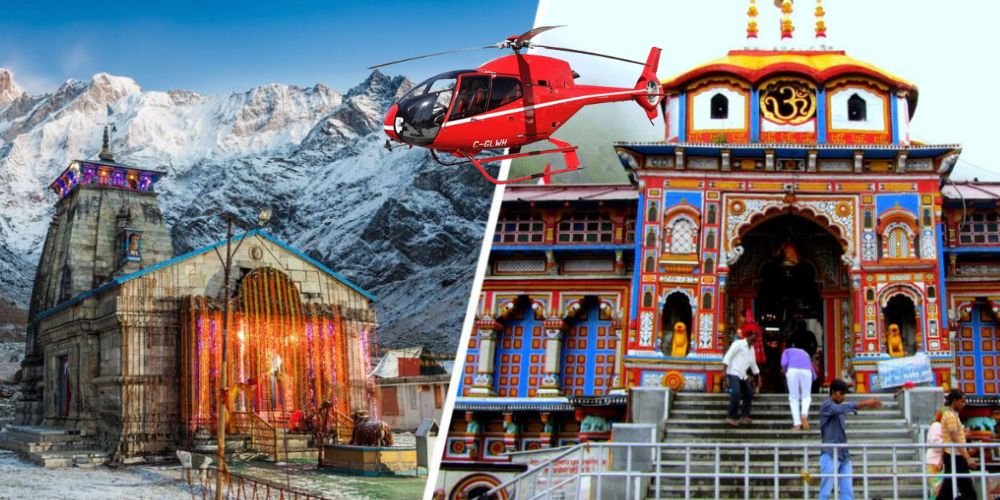
OVERVIEW :
KEDARNATH: Gracefully nestled in the serene Mandakini Valley and embraced by towering Himalayan peaks, the awe-inspiring Kedarnath Temple rises from a glacial terrace—an ancient remnant of ice long vanished. This sacred land belongs to Lord Shiva, and every stone, stream, and summit echoes the legends of his divine presence. Tradition holds that the temple was built by the Pandavas, valiant heroes of the Mahabharata, as an act of devotion and repentance—seeking Lord Shiva’s forgiveness for the sin of fratricide after a dramatic pursuit through these mystical mountains. A pilgrimage to Kedarnath—revered as the fifth among the twelve Jyotirlingas scattered across India—is not merely a journey through breathtaking terrain, but a spiritual passage into timeless lore, where one seeks communion with the Eternal.
BADRINATH: Enshrined in timeless sanctity, the Badrinath Temple is believed to be as ancient as creation itself. Dedicated to Lord Vishnu, it was re-established in the 8th century by Adi Shankaracharya as part of his divine mission to rejuvenate Sanatan Dharma. Set along the sacred banks of the Rishi Ganga (Alaknanda), the temple—surrounded by a constellation of ancient sites—stands as a beacon for seekers of truth and transcendence. The final 11-kilometre ascent to Badrinath is steep, yet profoundly stirring. At Devdarshni, the valley unveils its splendour: the quaint township, the resplendent temple façade, the twin peaks of Nar and Narayan flanking it like celestial sentinels, and the snow-clad Neelkanth rising behind, radiant like a crown of divinity. In that sublime moment, the soul stirs, uplifted by the sheer majesty of the scene, and the pilgrim is drawn into a realm where the earthly meets the eternal.